A Lightweight Hyperparameter Optimization Tool 🚀

Overview

Lightweight Hyperparameter Optimization 🚀

Pyversions PyPI version Code style: black Colab

The mle-hyperopt package provides a simple and intuitive API for hyperparameter optimization of your Machine Learning Experiment (MLE) pipeline. It supports real, integer & categorical search variables and single- or multi-objective optimization.

Core features include the following:

  • API Simplicity: strategy.ask(), strategy.tell() interface & space definition.
  • Strategy Diversity: Grid, random, coordinate search, SMBO & wrapping around FAIR's nevergrad.
  • Search Space Refinement based on the top performing configs via strategy.refine(top_k=10).
  • Export of configurations to execute via e.g. python train.py --config_fname config.yaml.
  • Storage & reload search logs via strategy.save( ) , strategy.load( ) .

For a quickstart check out the notebook blog 📖 .

The API 🎮

from mle_hyperopt import RandomSearch

# Instantiate random search class
strategy = RandomSearch(real={"lrate": {"begin": 0.1,
                                        "end": 0.5,
                                        "prior": "log-uniform"}},
                        integer={"batch_size": {"begin": 32,
                                                "end": 128,
                                                "prior": "uniform"}},
                        categorical={"arch": ["mlp", "cnn"]})

# Simple ask - eval - tell API
configs = strategy.ask(5)
values = [train_network(**c) for c in configs]
strategy.tell(configs, values)

Implemented Search Types 🔭

Search Type Description search_config
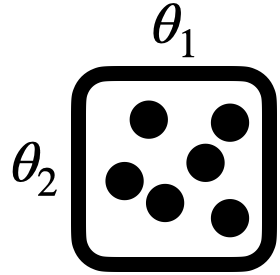
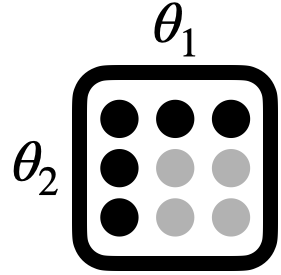
drawing GridSearch Search over list of discrete values -
drawing RandomSearch Random search over variable ranges refine_after, refine_top_k
drawing CoordinateSearch Coordinate-wise optimization with fixed defaults order, defaults
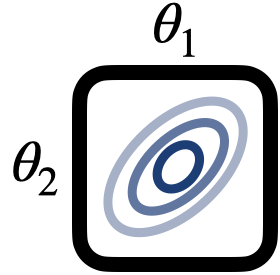
drawing SMBOSearch Sequential model-based optimization base_estimator, acq_function, n_initial_points
drawing NevergradSearch Multi-objective nevergrad wrapper optimizer, budget_size, num_workers

Variable Types & Hyperparameter Spaces 🌍

Variable Type Space Specification
drawing real Real-valued Dict: begin, end, prior/bins (grid)
drawing integer Integer-valued Dict: begin, end, prior/bins (grid)
drawing categorical Categorical List: Values to search over

Installation

A PyPI installation is available via:

pip install mle-hyperopt

Alternatively, you can clone this repository and afterwards 'manually' install it:

git clone https://github.com/RobertTLange/mle-hyperopt.git
cd mle-hyperopt
pip install -e .

Further Options 🚴

Saving & Reloading Logs 🏪

# Storing & reloading of results from .pkl
strategy.save("search_log.json")
strategy = RandomSearch(..., reload_path="search_log.json")

# Or manually add info after class instantiation
strategy = RandomSearch(...)
strategy.load("search_log.json")

Search Decorator 🧶

from mle_hyperopt import hyperopt

@hyperopt(strategy_type="grid",
          num_search_iters=25,
          real={"x": {"begin": 0., "end": 0.5, "bins": 5},
                "y": {"begin": 0, "end": 0.5, "bins": 5}})
def circle(config):
    distance = abs((config["x"] ** 2 + config["y"] ** 2))
    return distance

strategy = circle()

Storing Configuration Files 📑

# Store 2 proposed configurations - eval_0.yaml, eval_1.yaml
strategy.ask(2, store=True)
# Store with explicit configuration filenames - conf_0.yaml, conf_1.yaml
strategy.ask(2, store=True, config_fnames=["conf_0.yaml", "conf_1.yaml"])

Retrieving Top Performers & Visualizing Results 📉

# Get the top k best performing configurations
id, configs, values = strategy.get_best(top_k=4)

# Plot timeseries of best performing score over search iterations
strategy.plot_best()

# Print out ranking of best performers
strategy.print_ranking(top_k=3)

Refining the Search Space of Your Strategy 🪓

# Refine the search space after 5 & 10 iterations based on top 2 configurations
strategy = RandomSearch(real={"lrate": {"begin": 0.1,
                                        "end": 0.5,
                                        "prior": "log-uniform"}},
                        integer={"batch_size": {"begin": 1,
                                                "end": 5,
                                                "prior": "uniform"}},
                        categorical={"arch": ["mlp", "cnn"]},
                        search_config={"refine_after": [5, 10],
                                       "refine_top_k": 2})

# Or do so manually using `refine` method
strategy.tell(...)
strategy.refine(top_k=2)

Note that the search space refinement is only implemented for random, SMBO and nevergrad-based search strategies.

Development & Milestones for Next Release

You can run the test suite via python -m pytest -vv tests/. If you find a bug or are missing your favourite feature, feel free to contact me @RobertTLange or create an issue 🤗 .

Comments
  • [FEATURE] Hyperband

    [FEATURE] Hyperband

    Hi! I was wondering if the Hyperband hyperparameter algorithm is something you want implemented.

    I'm willing to spend some time working on it if there's interest.

    opened by colligant 5
  • [FEATURE] Option to pickle the whole strategy

    [FEATURE] Option to pickle the whole strategy

    Right now strategy.save produces a JSON with the log. Any reason you didn't opt for (or have an option of) pickling the whole strategy? Two motivations for this:

    1. Not having to re-init the strategy with all the args/kwargs
    2. Not having to loop through tell! SMBO can take quite some time to do this.
    opened by alexander-soare 4
  • Type checking strategy.log could be made more flexible?

    Type checking strategy.log could be made more flexible?

    Yay first issue! Congrats Robert, this is a great interface. Haven't used a hyperopt library in a while and this felt so easy to pick up.


    For example https://github.com/RobertTLange/mle-hyperopt/blob/57eb806e95c854f48f8faac2b2dc182d2180d393/mle_hyperopt/search.py#L251

    raises an error if my objective is numpy.float64. Also noticed https://github.com/RobertTLange/mle-hyperopt/blob/57eb806e95c854f48f8faac2b2dc182d2180d393/mle_hyperopt/search.py#L206

    Could we just have

    isinstance(strategy.log[0]['objective'], (float, int))
    

    which would cover the numpy types?

    opened by alexander-soare 4
  • Successive Halving, Hyperband, PBT

    Successive Halving, Hyperband, PBT

    • [x] Robust type checking with isinstance(self.log[0]["objective"], (float, int, np.integer, np.float))
    • [x] Add improvement method indicating if score is better than best stored one
    • [x] Fix logging message when log is stored
    • [x] Add save option for best plot
    • [x] Make json serializer more robust for numpy data types
    • [x] Add possibility to save as .pkl file by providing filename in .save method ending with .pkl (issue #2)
    • [x] Add args, kwargs into decorator
    • [x] Adds synchronous Successive Halving (SuccessiveHalvingSearch - issue #3)
    • [x] Adds synchronous HyperBand (HyperbandSearch - issue #3)
    • [x] Adds synchronous PBT (PBTSearch - issue #4 )
    opened by RobertTLange 1
  • [Feature] Synchronous PBT

    [Feature] Synchronous PBT

    Move PBT ask/tell functionality from mle-toolbox experimental to mle-hyperopt. Is there any literature/empirical evidence for the importance of being asynchronous?

    enhancement 
    opened by RobertTLange 1
Releases(v0.0.7)
  • v0.0.7(Feb 20, 2022)

    Added

    • Log reloading helper for post-processing.

    Fixed

    • Bug fix in mle-search with imports of dependencies. Needed to append path.
    • Bug fix with cleaning nested dictionaries. Have to make sure not to delete entire sub-dictionary.
    Source code(tar.gz)
    Source code(zip)
  • v0.0.6(Feb 20, 2022)

    Added

    • Adds a command line interface for running a sequential search given a python script <script>.py containing a function main(config), a default configuration file <base>.yaml & a search configuration <search>.yaml. The main function should return a single scalar performance score. You can then start the search via:

      mle-search <script>.py --base_config <base>.yaml --search_config <search>.yaml --num_iters <search_iters>
      

      Or short via:

      mle-search <script>.py -base <base>.yaml -search <search>.yaml -iters <search_iters>
      
    • Adds doc-strings to all functionalities.

    Changed

    • Make it possible to optimize parameters in nested dictionaries. Added helpers flatten_config and unflatten_config. For shaping 'sub1/sub2/vname' <-> {sub1: {sub2: {vname: v}}}
    • Make start-up message also print fixed parameter settings.
    • Cleaned up decorator with the help of Strategies wrapper.
    Source code(tar.gz)
    Source code(zip)
  • v0.0.5(Jan 5, 2022)

    Added

    • Adds possibility to store and reload entire strategies as pkl file (as asked for in issue #2).
    • Adds improvement method indicating if score is better than best stored one
    • Adds save option for best plot
    • Adds args, kwargs into decorator
    • Adds synchronous Successive Halving (SuccessiveHalvingSearch - issue #3)
    • Adds synchronous HyperBand (HyperbandSearch - issue #3)
    • Adds synchronous PBT (PBTSearch - issue #4)
    • Adds option to save log in tell method
    • Adds small torch mlp example for SH/Hyperband/PBT w. logging/scheduler
    • Adds print welcome/update message for strategy specific info

    Changed

    • Major internal restructuring:
      • clean_data: Get rid of extra data provided in configuration file
      • tell_search: Update model of search strategy (e.g. SMBO/Nevergrad)
      • log_search: Add search specific log data to evaluation log
      • update_search: Refine search space/change active strategy etc.
    • Also allow to store checkpoint of trained models in tell method.
    • Fix logging message when log is stored
    • Make json serializer more robust for numpy data types
    • Robust type checking with isinstance(self.log[0]["objective"], (float, int, np.integer, np.float))
    • Update NB to include mle-scheduler example
    • Make PBT explore robust for integer/categorical valued hyperparams
    • Calculate total batches & their sizes for hyperband
    Source code(tar.gz)
    Source code(zip)
  • v0.0.3(Oct 24, 2021)

    • Fixes CoordinateSearch active grid search dimension updating. We have to account for the fact that previous coordinates are not evaluated again after switching the active variable.
    • Generalizes NevergradSearch to wrap around all search strategies.
    • Adds rich logging to all console print statements.
    • Updates documentation and adds text to getting_started.ipynb.
    Source code(tar.gz)
    Source code(zip)
  • v0.0.2(Oct 20, 2021)

    • Fixes import bug when using PyPi installation.
    • Enhances documentation and test coverage.
    • Adds search space refinement for nevergrad and smbo search strategies via refine_after and refine_top_k:
    strategy = SMBOSearch(
            real={"lrate": {"begin": 0.1, "end": 0.5, "prior": "uniform"}},
            integer={"batch_size": {"begin": 1, "end": 5, "prior": "uniform"}},
            categorical={"arch": ["mlp", "cnn"]},
            search_config={
                "base_estimator": "GP",
                "acq_function": "gp_hedge",
                "n_initial_points": 5,
                "refine_after": 5,
                "refine_top_k": 2,
            },
            seed_id=42,
            verbose=True
        )
    
    • Adds additional strategy boolean option maximize_objective to maximize instead of performing default black-box minimization.
    Source code(tar.gz)
    Source code(zip)
  • v0.0.1(Oct 16, 2021)

    Base API implementation:

    from mle_hyperopt import RandomSearch
    
    # Instantiate random search class
    strategy = RandomSearch(real={"lrate": {"begin": 0.1,
                                            "end": 0.5,
                                            "prior": "log-uniform"}},
                            integer={"batch_size": {"begin": 32,
                                                    "end": 128,
                                                    "prior": "uniform"}},
                            categorical={"arch": ["mlp", "cnn"]})
    
    # Simple ask - eval - tell API
    configs = strategy.ask(5)
    values = [train_network(**c) for c in configs]
    strategy.tell(configs, values)
    
    Source code(tar.gz)
    Source code(zip)
Owner
Robert Lange
Deep Something @ TU Berlin 🕵️
Robert Lange
Estudos e projetos feitos com PySpark.

PySpark (Spark com Python) PySpark é uma biblioteca Spark escrita em Python, e seu objetivo é permitir a análise interativa dos dados em um ambiente d

Karinne Cristina 54 Nov 06, 2022
MegFlow - Efficient ML solutions for long-tailed demands.

Efficient ML solutions for long-tailed demands.

旷视天元 MegEngine 371 Dec 21, 2022
database for artificial intelligence/machine learning data

AIDB v0.0.1 database for artificial intelligence/machine learning data Overview aidb is a database designed for large dataset for machine learning pro

Aarush Gupta 1 Oct 24, 2021
A pure-python implementation of the UpSet suite of visualisation methods by Lex, Gehlenborg et al.

pyUpSet A pure-python implementation of the UpSet suite of visualisation methods by Lex, Gehlenborg et al. Contents Purpose How to install How it work

288 Jan 04, 2023
An implementation of Relaxed Linear Adversarial Concept Erasure (RLACE)

Background This repository contains an implementation of Relaxed Linear Adversarial Concept Erasure (RLACE). Given a dataset X of dense representation

Shauli Ravfogel 4 Apr 13, 2022
customer churn prediction prevention in telecom industry using machine learning and survival analysis

Telco Customer Churn Prediction - Plotly Dash Application Description This dash application allows you to predict telco customer churn using machine l

Benaissa Mohamed Fayçal 3 Nov 20, 2021
Skoot is a lightweight python library of machine learning transformer classes that interact with scikit-learn and pandas.

Skoot is a lightweight python library of machine learning transformer classes that interact with scikit-learn and pandas. Its objective is to ex

Taylor G Smith 54 Aug 20, 2022
K-means clustering is a method used for clustering analysis, especially in data mining and statistics.

K Means Algorithm What is K Means This algorithm is an iterative algorithm that partitions the dataset according to their features into K number of pr

1 Nov 01, 2021
Python module for machine learning time series:

seglearn Seglearn is a python package for machine learning time series or sequences. It provides an integrated pipeline for segmentation, feature extr

David Burns 536 Dec 29, 2022
Tools for mathematical optimization region

Tools for mathematical optimization region

林景 15 Nov 30, 2022
🚪✊Knock Knock: Get notified when your training ends with only two additional lines of code

Knock Knock A small library to get a notification when your training is complete or when it crashes during the process with two additional lines of co

Hugging Face 2.5k Jan 07, 2023
Book Item Based Collaborative Filtering

Book-Item-Based-Collaborative-Filtering Collaborative filtering methods are used

Şebnem 3 Jan 06, 2022
Can a machine learning project be implemented to estimate the salaries of baseball players whose salary information and career statistics for 1986 are shared?

END TO END MACHINE LEARNING PROJECT ON HITTERS DATASET Can a machine learning project be implemented to estimate the salaries of baseball players whos

Pinar Oner 7 Dec 18, 2021
Mosec is a high-performance and flexible model serving framework for building ML model-enabled backend and microservices

Mosec is a high-performance and flexible model serving framework for building ML model-enabled backend and microservices. It bridges the gap between any machine learning models you just trained and t

164 Jan 04, 2023
Price forecasting of SGB and IRFC Bonds and comparing there returns

Project_Bonds Project Title : Price forecasting of SGB and IRFC Bonds and comparing there returns. Introduction of the Project The 2008-09 global fina

Tishya S 1 Oct 28, 2021
Simple, light-weight config handling through python data classes with to/from JSON serialization/deserialization.

Simple but maybe too simple config management through python data classes. We use it for machine learning.

Eren Gölge 67 Nov 29, 2022
Exemplary lightweight and ready-to-deploy machine learning project

Exemplary lightweight and ready-to-deploy machine learning project

snapADDY GmbH 6 Dec 20, 2022
Relevance Vector Machine implementation using the scikit-learn API.

scikit-rvm scikit-rvm is a Python module implementing the Relevance Vector Machine (RVM) machine learning technique using the scikit-learn API. Quicks

James Ritchie 204 Nov 18, 2022
Laporan Proyek Machine Learning - Azhar Rizki Zulma

Laporan Proyek Machine Learning - Azhar Rizki Zulma Project Overview Domain proyek yang dipilih dalam proyek machine learning ini adalah mengenai hibu

Azhar Rizki Zulma 6 Mar 12, 2022