A PyTorch port of the Neural 3D Mesh Renderer

Overview

Neural 3D Mesh Renderer (CVPR 2018)

This repo contains a PyTorch implementation of the paper Neural 3D Mesh Renderer by Hiroharu Kato, Yoshitaka Ushiku, and Tatsuya Harada. It is a port of the original Chainer implementation released by the authors. Currently the API is the same as in the original implementation with some smalls additions (e.g. render using a general 3x4 camera matrix, lens distortion coefficients etc.). However it is possible that it will change in the future.

The library is fully functional and it passes all the test cases supplied by the authors of the original library. Detailed documentation will be added in the near future.

Requirements

Python 2.7+ and PyTorch 0.4.0.

The code has been tested only with PyTorch 0.4.0, there are no guarantees that it is compatible with older versions. Currently the library has both Python 3 and Python 2 support.

Note: In some newer PyTorch versions you might see some compilation errors involving AT_ASSERT. In these cases you can use the version of the code that is in the branch at_assert_fix. These changes will be merged into master in the near future.

Installation

You can install the package by running

pip install neural_renderer_pytorch

Since running install.py requires PyTorch, make sure to install PyTorch before running the above command.

Running examples

python ./examples/example1.py
python ./examples/example2.py
python ./examples/example3.py
python ./examples/example4.py

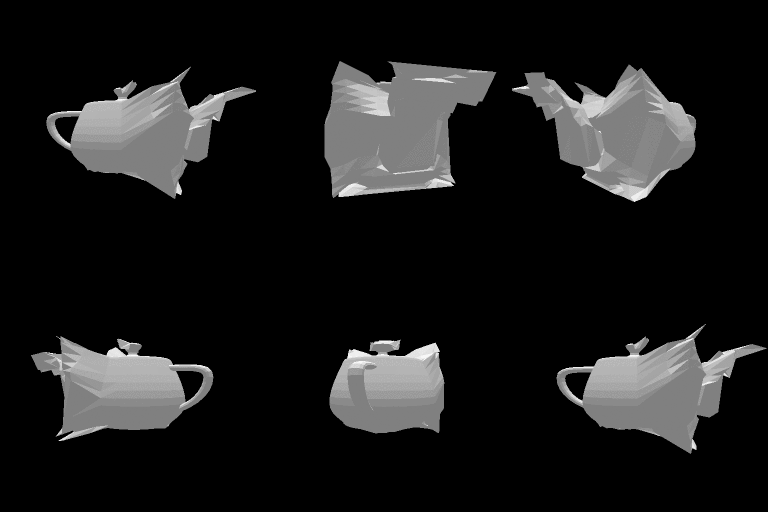
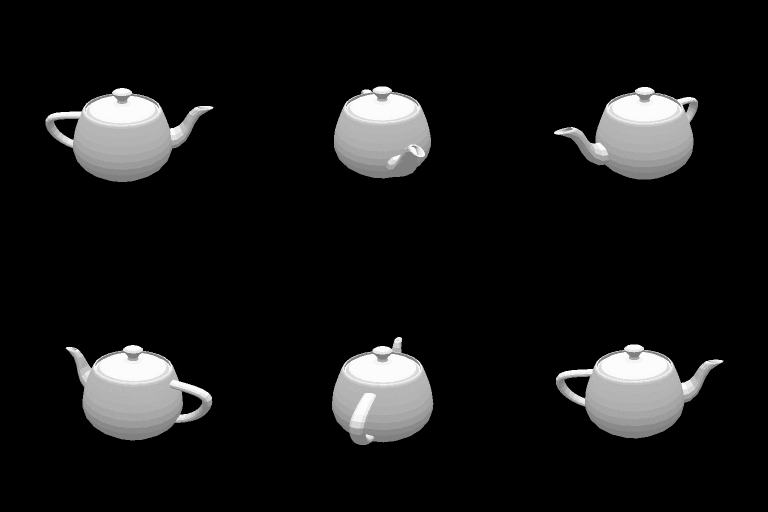
Example 1: Drawing an object from multiple viewpoints
Example 2: Optimizing vertices

Transforming the silhouette of a teapot into a rectangle. The loss function is the difference between the rendered image and the reference image.

Reference image, optimization, and the result.

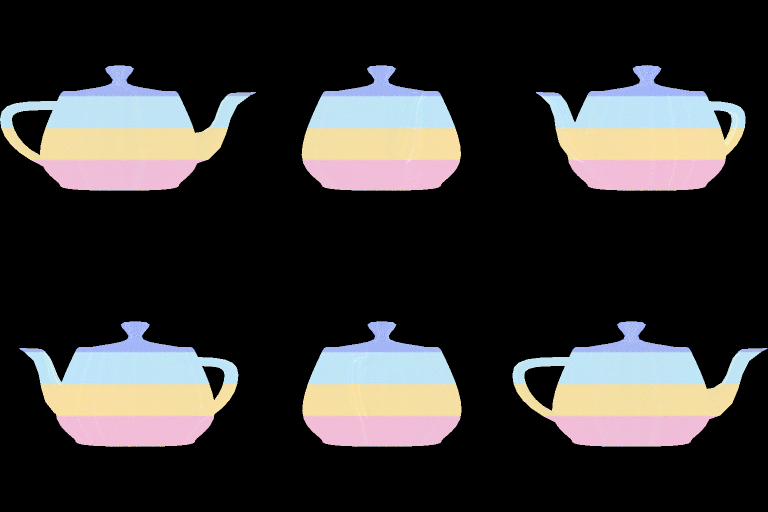
Example 3: Optimizing textures

Matching the color of a teapot with a reference image.

Reference image, result.

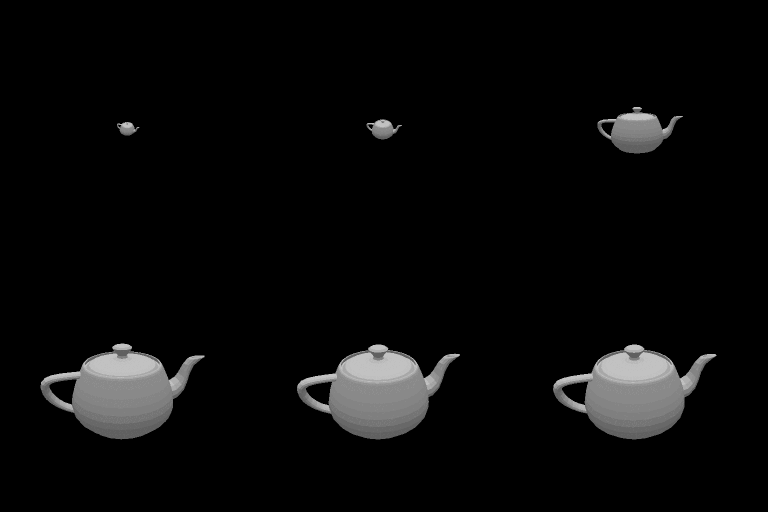
Example 4: Finding camera parameters

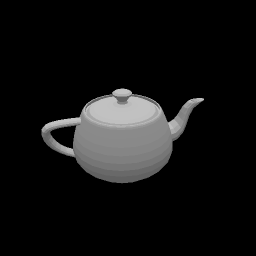
The derivative of images with respect to camera pose can be computed through this renderer. In this example the position of the camera is optimized by gradient descent.

From left to right: reference image, initial state, and optimization process.
Citation

@InProceedings{kato2018renderer
    title={Neural 3D Mesh Renderer},
    author={Kato, Hiroharu and Ushiku, Yoshitaka and Harada, Tatsuya},
    booktitle={The IEEE Conference on Computer Vision and Pattern Recognition (CVPR)},
    year={2018}
}
Owner
Daniilidis Group University of Pennsylvania
Research group of Prof. Kostas Daniilidis
Daniilidis Group University of Pennsylvania
Using BERT+Bi-LSTM+CRF

Chinese Medical Entity Recognition Based on BERT+Bi-LSTM+CRF Step 1 I share the dataset on my google drive, please download the whole 'CCKS_2019_Task1

Xiang WU 55 Dec 21, 2022
Facebook AI Research Sequence-to-Sequence Toolkit written in Python.

Fairseq(-py) is a sequence modeling toolkit that allows researchers and developers to train custom models for translation, summarization, language mod

20.5k Jan 08, 2023
A Protein-RNA Interface Predictor Based on Semantics of Sequences

PRIP PRIP:A Protein-RNA Interface Predictor Based on Semantics of Sequences installation gensim==3.8.3 matplotlib==3.1.3 xgboost==1.3.3 prettytable==2

李优 0 Mar 25, 2022
Pytorch implementation of Integrating Tree Path in Transformer for Code Representation

This is an official Pytorch implementation of the approaches proposed in: Han Peng, Ge Li, Wenhan Wang, Yunfei Zhao, Zhi Jin “Integrating Tree Path in

Han Peng 16 Dec 23, 2022
(NeurIPS 2021) Realistic Evaluation of Transductive Few-Shot Learning

Realistic evaluation of transductive few-shot learning Introduction This repo contains the code for our NeurIPS 2021 submitted paper "Realistic evalua

Olivier Veilleux 14 Dec 13, 2022
Find the Heart simple Python Game

This is a simple Python game for finding a heart emoji. There is a 3 x 3 matrix in which a heart emoji resides. The location of the heart is randomized and is not revealed. The player must guess the

p.katekomol 1 Jan 24, 2022
Ganilla - Official Pytorch implementation of GANILLA

GANILLA We provide PyTorch implementation for: GANILLA: Generative Adversarial Networks for Image to Illustration Translation. Paper Arxiv Updates (Fe

Samet Hi 462 Dec 05, 2022
G-NIA model from "Single Node Injection Attack against Graph Neural Networks" (CIKM 2021)

Single Node Injection Attack against Graph Neural Networks This repository is our Pytorch implementation of our paper: Single Node Injection Attack ag

Shuchang Tao 18 Nov 21, 2022
A repo that contains all the mesh keys needed for mesh backend, along with a code example of how to use them in python

Mesh-Keys A repo that contains all the mesh keys needed for mesh backend, along with a code example of how to use them in python Have been seeing alot

Joseph 53 Dec 13, 2022
Orthogonal Jacobian Regularization for Unsupervised Disentanglement in Image Generation (ICCV 2021)

Orthogonal Jacobian Regularization for Unsupervised Disentanglement in Image Generation Home | PyTorch BigGAN Discovery | TensorFlow ProGAN Regulariza

Yuxiang Wei 54 Dec 30, 2022
DAFNe: A One-Stage Anchor-Free Deep Model for Oriented Object Detection

DAFNe: A One-Stage Anchor-Free Deep Model for Oriented Object Detection Code for our Paper DAFNe: A One-Stage Anchor-Free Deep Model for Oriented Obje

Steven Lang 58 Dec 19, 2022
Train an imgs.ai model on your own dataset

imgs.ai is a fast, dataset-agnostic, deep visual search engine for digital art history based on neural network embeddings.

Fabian Offert 5 Dec 21, 2021
Xintao 1.4k Dec 25, 2022
AI Face Mesh: This is a simple face mesh detection program based on Artificial intelligence.

AI Face Mesh: This is a simple face mesh detection program based on Artificial Intelligence which made with Python. It's able to detect 468 different

Md. Rakibul Islam 1 Jan 13, 2022
Official implementation of "Accelerating Reinforcement Learning with Learned Skill Priors", Pertsch et al., CoRL 2020

Accelerating Reinforcement Learning with Learned Skill Priors [Project Website] [Paper] Karl Pertsch1, Youngwoon Lee1, Joseph Lim1 1CLVR Lab, Universi

Cognitive Learning for Vision and Robotics (CLVR) lab @ USC 134 Dec 06, 2022
Repository for Driving Style Recognition algorithms for Autonomous Vehicles

Driving Style Recognition Using Interval Type-2 Fuzzy Inference System and Multiple Experts Decision Making Created by Iago Pachêco Gomes at USP - ICM

Iago Gomes 9 Nov 28, 2022
Autotype on websites that have copy-paste disabled like Moodle, HackerEarth contest etc.

Autotype A quick and small python script that helps you autotype on websites that have copy paste disabled like Moodle, HackerEarth contests etc as it

Tushar 32 Nov 03, 2022
Fine-tuning StyleGAN2 for Cartoon Face Generation

Cartoon-StyleGAN 🙃 : Fine-tuning StyleGAN2 for Cartoon Face Generation Abstract Recent studies have shown remarkable success in the unsupervised imag

Jihye Back 520 Jan 04, 2023
Designing a Practical Degradation Model for Deep Blind Image Super-Resolution (ICCV, 2021) (PyTorch) - We released the training code!

Designing a Practical Degradation Model for Deep Blind Image Super-Resolution Kai Zhang, Jingyun Liang, Luc Van Gool, Radu Timofte Computer Vision Lab

Kai Zhang 804 Jan 08, 2023
Memory efficient transducer loss computation

Introduction This project implements the optimization techniques proposed in Improving RNN Transducer Modeling for End-to-End Speech Recognition to re

Fangjun Kuang 51 Nov 25, 2022