Generate text captions for images from their CLIP embeddings. Includes PyTorch model code and example training script.

Overview

clip-text-decoder

Generate text captions for images from their CLIP embeddings. Includes PyTorch model code and example training script.

Example Predictions

Example captions were computed with the pretrained model mentioned below.

"A man riding a wave on top of a surfboard."

A surfer riding a wave

A baseball player is swinging a bat at a ball.
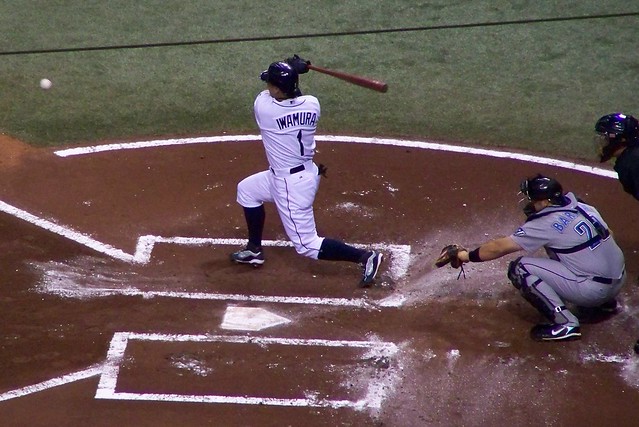
Baseball player

"A dog running across a field with a frisbee."

Dog with frisbee

Installation

Install for easier access to the following objects/classes:

  • clip_text_decoder.datasets.ClipCocoCaptionsDataset
  • clip_text_decoder.models.ClipDecoder
  • clip_text_decoder.models.ClipDecoderInferenceModel
  • clip_text_decoder.tokenizer.Tokenizer

The train.py script will not be available in the installed package, since it's located in the root directory. To train new models, either clone this repository or recreate train.py locally.

Using pip:

pip install clip-text-decoder

From source:

git clone https://github.com/fkodom/clip-text-decoder.git
cd clip-text-decoder
pip install .

NOTE: You'll also need to install openai/CLIP to encode images with CLIP. This is also required by ClipCocoCaptionsDataset to build the captions dataset the first time (cached for subsequent calls).

pip install "clip @ git+https://github.com/openai/CLIP.git"

For technical reasons, the CLIP dependency can't be included in the PyPI package, since it's not an officially published package.

Training

Open In Colab

Launch your own training session using the provided script (train.py):

python train.py --max-epochs 5

Training CLI arguments, along with their default values:

--max-epochs 5  # (int)
--num-layers 6  # (int)
--dim-feedforward 256  # (int)
--precision 16  # (16 or 32)
--seed 0  # (int)

Inference

The training script will produce a model.zip archive, containing the Tokenizer and trained model parameters. To perform inference with it:

import clip
from PIL import Image
import torch

from clip_text_decoder.model import ClipDecoderInferenceModel

device = "cuda" if torch.cuda.is_available() else "cpu"
model = ClipDecoderInferenceModel.load("path/to/model.zip").to(device)
clip_model, clip_preprocessor = clip.load("ViT-B/32", device=device, jit=False)

# Create a blank dummy image
dummy_image = Image.new("RGB", (224, 224))
preprocessed = clip_preprocessor(dummy_image).to(device)
# Add a batch dimension using '.unsqueeze(0)'
encoded = clip_model.encode_image(preprocessed.unsqueeze(0))
text = model(encoded)

print(text)
# Probably some nonsense, because we used a dummy image.

Pretrained Models

A pretrained CLIP decoder is hosted in my Google Drive, and can easily be downloaded by:

from clip_text_decoder.model import ClipDecoderInferenceModel

model = ClipDecoderInferenceModel.download_pretrained()

To cache the pretrained model locally, so that it's not re-downloaded each time:

model = ClipDecoderInferenceModel.download_pretrained("/path/to/model.zip")

Shortcomings

  • Only works well with COCO-style images. If you go outside the distribution of COCO objects, you'll get nonsense text captions.
  • Relatively short training time. Even within the COCO domain, you'll occasionally see incorrect captions. Quite a few captions will have bad grammar, repetitive descriptors, etc.
Comments
  • Decoding Text Embeddings Coded Using Hugging Face ClipTextModel

    Decoding Text Embeddings Coded Using Hugging Face ClipTextModel

    Suppose that I have text embeddings created using Hugging Face's ClipTextModel using the following method:

    import torch
    from transformers import CLIPTokenizer, CLIPTextModel
    
    class_list = ["i love going home and playing with my wife and kids", "i love going home", "playing with my wife and kids", 
    "family", "war", "writing"]
    
    model = CLIPTextModel.from_pretrained("openai/clip-vit-large-patch14")
    tokenizer = CLIPTokenizer.from_pretrained("openai/clip-vit-large-patch14")
    
    inputs = tokenizer(class_list, padding=True, return_tensors="pt")
    outputs = model(**inputs)
    hidden_state = outputs.last_hidden_state
    embeddings = outputs.pooler_output
    

    Questions:

    1. Is It possible to use the clip-text-decoder to convert the embeddings back to text?
    2. If it is indeed possible to do so, could you provide an example of how?

    Looking forward to receiving your feedback.

    opened by mbdzi 6
  • Fix string error when loading clip models.

    Fix string error when loading clip models.

    error

    The model name string ( VIT-xxx ) in the check_vision_backbone function is not compatible with the model name string ( ViT-xxx ) of the clip repository, which will cause at least one error in check_vision_backbone function or when loading the clip model.

    solution

    In this PR, the model name string in the check_vision_backbone function is modified to ViT-xxx to make it compatible with the clip repository.

    opened by Adenialzz 1
  • BLIP vision backbone

    BLIP vision backbone

    • Added blip backbone; still cleaning up last pieces
    • Bug fixes for training script, and remove debug code.
    • Fix dependencies in test workflow; update README statistics
    • Fix test issue with CUDA device
    • Update unit tests for newer Python, torch versions
    • Test up to Python 3.10
    • Test up to Python 3.9
    • Install lavis first
    opened by fkodom 0
  • Feature: Beam Search

    Feature: Beam Search

    • Add beam search, clip dependency to setup.py
    • Fix installation instructions
    • Remove main clause
    • Add '--beam-size' option to 'train.py' script.
    • Update README; propagate the '--beam-size' arg through eval functions
    • Update setup.cfg, add pre-commit hooks
    • Reformat images
    • Remove fixed image width
    • Add detail to README; comments to call method for beam search
    • Updated README headline
    opened by fkodom 0
  • Bug Fixes for Broken Tests

    Bug Fixes for Broken Tests

    • Cache the old fashioned way :)
    • Fix silly typo in test for image caption model
    • Apply black and isort formatting
    • Install latest version of 'black', reapply formatting
    • Fix flake8 issue (duplicate function definition), and install latest patch version of pytorch for tests.
    • Skip slow tests by default, add 'slow' marker to inference model tests.
    opened by fkodom 0
  • GPT2 Decoder

    GPT2 Decoder

    • Update model to use DistilGPT2 as a pre-trained decoder.
    • Removed tokenizer (no longer used), fixed bugs in Model source file, and updated model unit tests.
    • Backwards compatibility for 'gdown.download' method.
    • Update installation requirements, caption examples in README
    opened by fkodom 0
  • Upgrade CodeSee workflow to version 2

    Upgrade CodeSee workflow to version 2

    CodeSee is a code visibility platform.

    This change updates the CodeSee workflow file to the latest version for security, maintenance, and support improvements (see changelog below).

    That workflow file:

    • runs CodeSee's code analysis on every PR push and merge
    • uploads that analysis to CodeSee.
    • It does not transmit your code.

    The code analysis is used to generate maps and insights about this codebase.

    CodeSee workflow changelog:

    • Improved security: Updates permission to be read-only.
    • Improved future maintenance: Replaces the body of the workflow with a single github action: codesee-action. This makes it significantly easier for CodeSee to introduce future improvements and fixes without requiring another PR like this.
    • Improved Python support: The action now properly supports Python 3.11, and will continue to support new Python versions as they are released.
    opened by codesee-maps[bot] 1
  • Incompatible checksum error

    Incompatible checksum error

    I see the following error when trying to load the pretrained model.

        tokenizer=pickle.loads(tokenizer_buffer.read()),
      File "stringsource", line 6, in spacy.pipeline.trainable_pipe.__pyx_unpickle_TrainablePipe
    _pickle.PickleError: Incompatible checksums (102742709 vs 0x417ddeb = (cfg, model, name, vocab))
    

    Am I missing something?

    opened by dapurv5 0
Releases(1.4.4)
  • 1.4.4(Nov 7, 2022)

    What's Changed

    • Fix string error when loading clip models. by @Adenialzz in https://github.com/fkodom/clip-text-decoder/pull/12

    New Contributors

    • @Adenialzz made their first contribution in https://github.com/fkodom/clip-text-decoder/pull/12

    Full Changelog: https://github.com/fkodom/clip-text-decoder/compare/1.4.3...1.4.4

    Source code(tar.gz)
    Source code(zip)
  • 1.4.3(Nov 7, 2022)

    What's Changed

    • Refactor Dataset by @fkodom in https://github.com/fkodom/clip-text-decoder/pull/11

    Full Changelog: https://github.com/fkodom/clip-text-decoder/compare/1.4.2...1.4.3

    Source code(tar.gz)
    Source code(zip)
  • 1.4.2(Oct 26, 2022)

    What's Changed

    • Huggingface Evaluate by @fkodom in https://github.com/fkodom/clip-text-decoder/pull/9

    Full Changelog: https://github.com/fkodom/clip-text-decoder/compare/1.4.1...1.4.2

    Source code(tar.gz)
    Source code(zip)
  • 1.4.1(Oct 26, 2022)

    What's Changed

    • Datapipes by @fkodom in https://github.com/fkodom/clip-text-decoder/pull/8

    Full Changelog: https://github.com/fkodom/clip-text-decoder/compare/1.4.0...1.4.1

    Source code(tar.gz)
    Source code(zip)
  • 1.4.0(Oct 23, 2022)

    What's Changed

    • BLIP vision backbone by @fkodom in https://github.com/fkodom/clip-text-decoder/pull/7

    Full Changelog: https://github.com/fkodom/clip-text-decoder/compare/1.3.0...1.4.0

    Source code(tar.gz)
    Source code(zip)
  • 1.3.0(Oct 2, 2022)

    What's Changed

    • Feature: Beam Search by @fkodom in https://github.com/fkodom/clip-text-decoder/pull/5
    • Bug Fix: PyPI Release by @fkodom in https://github.com/fkodom/clip-text-decoder/pull/6

    Full Changelog: https://github.com/fkodom/clip-text-decoder/compare/1.2.0...1.3.0

    Source code(tar.gz)
    Source code(zip)
  • 1.2.0(Jan 29, 2022)

    What's Changed

    • Cache CLIP embeddings for the dataset, rather than recomputing them each time.

    • Reduce model file sizes by storing at lower precision

    • Add an ImageCaptionInferenceModel class for easier out-of-the-box use

    • Fix some broken unit tests

    • Better Data Caching by @fkodom in https://github.com/fkodom/clip-text-decoder/pull/3

    • Bug Fixes for Broken Tests by @fkodom in https://github.com/fkodom/clip-text-decoder/pull/4

    Full Changelog: https://github.com/fkodom/clip-text-decoder/compare/1.1.0...1.2.0

    Source code(tar.gz)
    Source code(zip)
  • 1.1.0(Dec 22, 2021)

    What's Changed

    • GPT2 Decoder by @fkodom in https://github.com/fkodom/clip-text-decoder/pull/2

    New Contributors

    • @fkodom made their first contribution in https://github.com/fkodom/clip-text-decoder/pull/2

    Full Changelog: https://github.com/fkodom/clip-text-decoder/compare/1.0.0...1.1.0

    Source code(tar.gz)
    Source code(zip)
  • 0.1.1(Nov 14, 2021)

  • 0.1.0(Nov 14, 2021)

Owner
Frank Odom
Director of Innovation at Plainsight. I like neural nets, and neural nets like me.
Frank Odom
Anomaly detection related books, papers, videos, and toolboxes

Anomaly Detection Learning Resources Outlier Detection (also known as Anomaly Detection) is an exciting yet challenging field, which aims to identify

Yue Zhao 6.7k Dec 31, 2022
Code for "Diffusion is All You Need for Learning on Surfaces"

Source code for "Diffusion is All You Need for Learning on Surfaces", by Nicholas Sharp Souhaib Attaiki Keenan Crane Maks Ovsjanikov NOTE: the linked

Nick Sharp 247 Dec 28, 2022
Deep Image Search is an AI-based image search engine that includes deep transfor learning features Extraction and tree-based vectorized search.

Deep Image Search - AI-Based Image Search Engine Deep Image Search is an AI-based image search engine that includes deep transfer learning features Ex

139 Jan 01, 2023
Video-based open-world segmentation

UVO_Challenge Team Alpes_runner Solutions This is an official repo for our UVO Challenge solutions for Image/Video-based open-world segmentation. Our

Yuming Du 84 Dec 22, 2022
PyTorch implementation for the paper Visual Representation Learning with Self-Supervised Attention for Low-Label High-Data Regime

Visual Representation Learning with Self-Supervised Attention for Low-Label High-Data Regime Created by Prarthana Bhattacharyya. Disclaimer: This is n

Prarthana Bhattacharyya 5 Nov 08, 2022
Contrastively Disentangled Sequential Variational Audoencoder

Contrastively Disentangled Sequential Variational Audoencoder (C-DSVAE) Overview This is the implementation for our C-DSVAE, a novel self-supervised d

Junwen Bai 35 Dec 24, 2022
Implementation of "Generalizable Neural Performer: Learning Robust Radiance Fields for Human Novel View Synthesis"

Generalizable Neural Performer: Learning Robust Radiance Fields for Human Novel View Synthesis Abstract: This work targets at using a general deep lea

163 Dec 14, 2022
A simple but complete full-attention transformer with a set of promising experimental features from various papers

x-transformers A concise but fully-featured transformer, complete with a set of promising experimental features from various papers. Install $ pip ins

Phil Wang 2.3k Jan 03, 2023
Multi-Joint dynamics with Contact. A general purpose physics simulator.

MuJoCo Physics MuJoCo stands for Multi-Joint dynamics with Contact. It is a general purpose physics engine that aims to facilitate research and develo

DeepMind 5.2k Jan 02, 2023
Code for "Universal inference meets random projections: a scalable test for log-concavity"

How to use this repository This repository contains code to replicate the results of "Universal inference meets random projections: a scalable test fo

Robin Dunn 0 Nov 21, 2021
Tensorflow Implementation of SMU: SMOOTH ACTIVATION FUNCTION FOR DEEP NETWORKS USING SMOOTHING MAXIMUM TECHNIQUE

SMU A Tensorflow Implementation of SMU: SMOOTH ACTIVATION FUNCTION FOR DEEP NETWORKS USING SMOOTHING MAXIMUM TECHNIQUE arXiv https://arxiv.org/abs/211

Fuhang 5 Jan 18, 2022
Individual Treatment Effect Estimation

CAPE Individual Treatment Effect Estimation Run CAPE python train_causal.py --loop 10 -m cape_cau -d NI --i_t 1 Run a baseline model python train_cau

S. Deng 4 Sep 02, 2022
Python implementation of Project Fluent

Project Fluent This is a collection of Python packages to use the Fluent localization system. python-fluent consists of these packages: fluent.syntax

Project Fluent 155 Dec 28, 2022
Video Frame Interpolation with Transformer (CVPR2022)

VFIformer Official PyTorch implementation of our CVPR2022 paper Video Frame Interpolation with Transformer Dependencies python = 3.8 pytorch = 1.8.0

DV Lab 63 Dec 16, 2022
An expansion for RDKit to read all types of files in one line

RDMolReader An expansion for RDKit to read all types of files in one line How to use? Add this single .py file to your project and import MolFromFile(

Ali Khodabandehlou 1 Dec 18, 2021
DeepMoCap: Deep Optical Motion Capture using multiple Depth Sensors and Retro-reflectors

DeepMoCap: Deep Optical Motion Capture using multiple Depth Sensors and Retro-reflectors By Anargyros Chatzitofis, Dimitris Zarpalas, Stefanos Kollias

tofis 24 Oct 08, 2022
This repository contains the code for the paper ``Identifiable VAEs via Sparse Decoding''.

Sparse VAE This repository contains the code for the paper ``Identifiable VAEs via Sparse Decoding''. Data Sources The datasets used in this paper wer

Gemma Moran 17 Dec 12, 2022
a generic C++ library for image analysis

VIGRA Computer Vision Library Copyright 1998-2013 by Ullrich Koethe This file is part of the VIGRA computer vision library. You may use,

Ullrich Koethe 378 Dec 30, 2022
SenseNet is a sensorimotor and touch simulator for deep reinforcement learning research

SenseNet is a sensorimotor and touch simulator for deep reinforcement learning research

59 Feb 25, 2022
Net2net - Network-to-Network Translation with Conditional Invertible Neural Networks

Net2Net Code accompanying the NeurIPS 2020 oral paper Network-to-Network Translation with Conditional Invertible Neural Networks Robin Rombach*, Patri

CompVis Heidelberg 206 Dec 20, 2022